
Metals: The Forces That Forged Human History
completely transforming our society and shaping the world
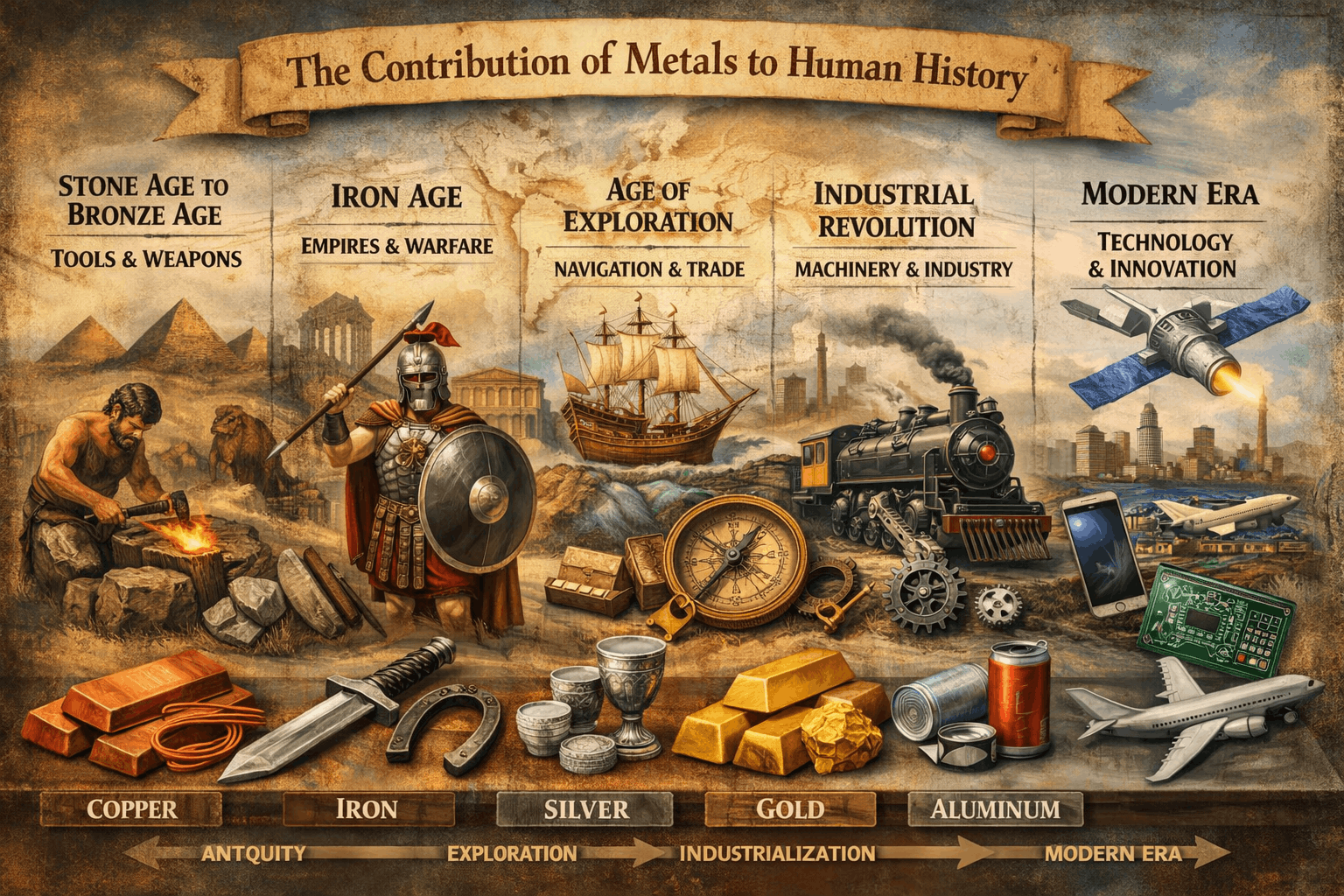
Metals have been the backbone of human civilization, completely transforming our society and shaping the world in ways we could never have imagined. From ancient times to the presents AI days, metals have played a crucial role in shaping our world. From hunting to art and from warfare to trade and Technology, we have relied on metals, from the earliest discovery of copper to radioactive metals, we have utilized them extensively.
The Modern Era: Electronics and AI
Even today, metals continue to drive innovation. The computer industry relies heavily on metals like copper, silicon, and rare earth elements. The rise of AI and electric vehicles has created new demands for metals such as lithium, cobalt, and nickel. the semiconductor material highly demand by Ai chips. ai processing and storage data pollution and important information stored use to highly silicon silver gold germanium aluminium and coper they mining industry clued be not full feel demand and trade is very costly prices. they ai centre is use a High-performance chip (GPUs, TPUs, custom AI accelerators) are essential for training and running large AI models. Data centres are now the biggest buyers of semiconductors, Silicon remains the backbone, but metals like copper, aluminium, and gold are critical for wiring and conductivity and make in chips . Germanium and silver are used in niche high-speed or optical applications and equipment
Key Metals Powering the AI Revolution
- Lithium: Powers batteries for AI-driven technologies and chips
- Cobalt: Essential for lithium-ion batteries
- Nickel: Used in battery storage and alloys
- Rare Earth Elements: Crucial for AI applications, especially in magnets and sensors
- Copper: Fundamental for electrical wiring and AI infrastructure
- Silicon : The backbone of the semiconductor industry
The Early Days: The Contribution of Copper and Bronze
It all began around 9000 BCE when humans discovered copper, the first metal. This ushered in the Copper Age, where metalworking techniques developed, and bronze emerged as a game-changer. Bronze, an alloy of copper and tin, revolutionized warfare, industry, and art.
The Iron Age: A New Era
The Iron Age, which began around 1200 BCE, brought iron to the forefront. The strength and durability of iron transformed agriculture, construction, and warfare. The Celts and Romans mastered iron smelting, using it to build empires war wepaon and construct magnificent structures.
Metals Contribute in Art, Warfare, and Trade
Metals have played a significant role in shaping art, warfare, and trade. From bronze sculptures to iron swords, metals have been used to create exquisite works of art and wage wars. The development of steel in the 19th century further accelerated industrialization and urbanization. Metals like gold and silver were extensively used for trade and as currency.
Selection of Metals
Economic Value –
Extracting gold, silver, and palladium reduces costs and increases profits. Therefore, humans have always chosen metals that are highly useful and readily available. This is why humans have chosen these metals, with copper, gold, silver, and iron being the most prominent.
Sustainability –
Using sustainable metals reduces dependence on environmentally harmful mining. This makes metals easier to reuse and lowers costs.
Compliance –
Humans didn’t choose metals overnight. They examined their chemical properties, strength, and environmental friendliness before extracting them, and then further research improved them.
Metals in Human History
The Age of Metals (approximately 8000–6000 BCE):
Early humans found metals like gold, silver, and copper in their natural state in mountains and rivers. Initially, humans considered light metal to be shiny, soft pieces of stone, but as it evolved, its uses began to be understood. Copper was probably the first metal to be mined and manufactured, appearing in the Middle East around 9000 BCE.
The Metal Age (approximately 6000–1000 BCE):
This period saw the development of metallurgy—the smelting of ores to extract metals. They learned to research, separate metals, shape, and purify them.
Copper Age (about 6200 BC):
Anatolia began using smelted copper. Pottery, sculpture, and small weapons became prominent.
Bronze Age (about 3800 BC):
Copper was mixed with tin to form bronze, a much stronger material. It was used to make tools, sculptures, utensils, weapons, and other useful objects.
Iron Age (about 1500 BC):
Smelted iron and later steel replaced bronze for tools and weapons, creating more durable materials that were stronger and protected warriors and warriors for longer.
Historical Development:
Gold and Silver: Initially used for jewelry and later for coinage in the Roman, Chinese, and Indian empires.
Copper: Used for tools and weapons in ancient civilizations, including the Egyptians and Mesopotamians.
Bronze: Revolutionized warfare and agriculture during the Bronze Age, with civilizations like the Sumerians and Minoans leading the way.
Iron: Transformed societies during the Iron Age, with the Hittites and later the Romans mastering iron smelting for military and infrastructure advancements.
Steel: Developed in the 19th century, it became essential for industrialization, with the Bessemer process making mass production possible.
Modern era From the 18th century, elements such as cobalt (1735), nickel (1751), and manganese (1774) were discovered, leading to the creation of complex, specialized alloys used in modern, heavy industrial applications.