
The Future of Human-Computer Interface ? Neuralink Decodes Brain Signals into Action .How Does Neuralink Work? Real-World Results from Latest Brain Chip Trials
A new development has emerged in the fields of human and medical science: a company named Neuralink has successfully implanted an electronic chip into a human brain. This chip reads the multiple neural signals generated within the brain and processes them; effectively, the Neuralink chip displays messages conceived by your mind onto a screen. Let’s talk about the development stages of Neuralink, the company founded by Elon Musk. The project, which has been underway for three to four years, aims to connect the human brain to computers by implanting a chip. This technology works by reading brain signals and converting them into digital signals that can control computers, robotic systems, and other machines. Although research is ongoing, the first phase has demonstrated that the implanted chip can display highly accurate information. The Neuralink chip utilizes flexible threads containing 1,024 electrodes to record neuronal activity the signals that transmit messages throughout the body and govern nearly all human functions. This tiny device is powered by an advanced, custom-designed chip that processes signals and transmits them digitally, utilizing standard Bluetooth or wired connections. Future development aims to enable the system to process higher-level brain functions, such as learning and emotion, while ensuring the precise placement of the electrodes.
The Use Case
Efforts are currently underway involving patients suffering from severe paralysis. The process focuses on capturing signals generated by the patient—which the body itself is unable to fully interpret—using a neural link chip. This chip interprets the signals from non-functional body parts and converts them into a digital format; patients can then use this output to operate various devices. Future objectives include using this technology to translate brain signals into visual images, enabling us to comprehend the full range of signals such as images or messages generated by the patient. So far, we have achieved promising results indicating the potential success of this approach.
The equipment—or rather, device we are discussing is called “Neuralink.” It is a coin-sized unit containing various electronic components, including sensors, transistors, and memory chips. Designed to be fitted externally to the brain, it reads brain signals in various ways and makes extensive use of AI technology.
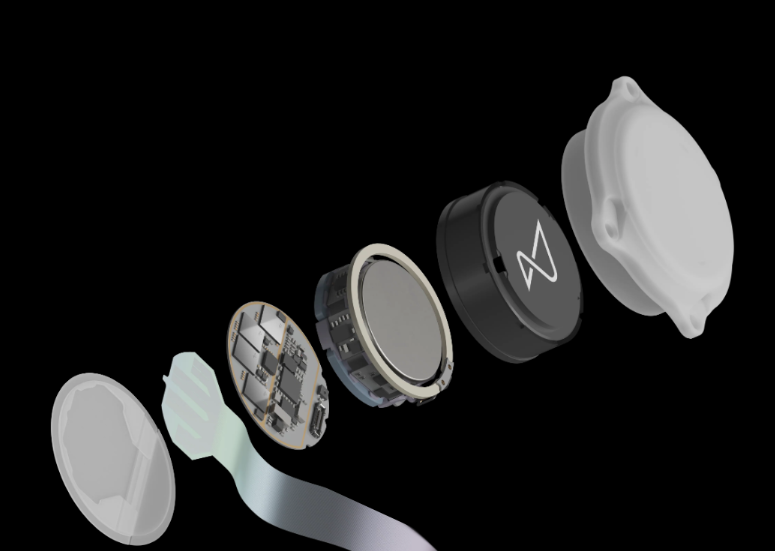
Elon Musk’s company, Neuralink, is making headlines with its groundbreaking technology that decodes brain signals into words. This revolutionary approach has the potential to transform communication for people with speech impairments and beyond. Neuralink’s technology has the potential to revolutionize communication for people with speech impairments, allowing them to express their thoughts directly through brain signals. This technology’s impact goes beyond medical applications and could impact diverse fields such as education, entertainment, and everyday communication. Neuralink’s brain chip, implanted in the brain, captures neural activity and translates it into text. This chip uses advanced algorithms to interpret the electrical signals generated by neurons. Later in this article, we’ll explore its application and how users can communicate directly through thoughts. However, recent trials have shown promising results, with participants able to speak simple words and sentences using the Neuralink device. This technology is still in its early stages, but its implications for medical applications and human-computer interaction are profound. As Neuralink continues to refine its technology, the future of human speech could be revolutionized, opening up new opportunities for communication and interaction. The potential of this technology extends beyond medical applications and could impact diverse fields such as education, entertainment, and even everyday communication. Neuralink’s innovative method of decoding brain signals into words is a major leap forward in the fields of neuroscience and communication technology. As research progresses, we can expect to see even more exciting developments that could transform the way we interact with the world around us. This article contains further details.
Installation and Working Process
This physical device is a chip designed to be implanted in a specific location on the skull; it is roughly the size of a coin and sits beneath the skin, remaining invisible from the outside. The chip contains 1,024 ultra-thin electrodes. These electrodes are implanted with extreme precision directly into the cerebral cortex—the brain’s outermost layer responsible for motor control and sensory processing. Great care is taken to ensure the electrodes are placed in the exact right spot, as any error or issue during implantation could lead to serious complications. To mitigate this risk, the company developed a specialized robot to perform the implantation, as manual placement by human hands would carry a high risk of error. This robot uses multiple cameras and operates with sub-millimeter precision to fit the chip into the brain. It converts the analog signals generated by brain activity—detected via voltage changes between the electrodes—into digital signals. Once the signal processing is complete, the data is transmitted via Bluetooth to external devices such as computers, phones, or robotic limbs. There, algorithms decode the signals, identifying specific electrical patterns associated with the user’s intent and translating them into physical actions—such as moving a mouse cursor on a screen or displaying a text message.
Real-World Results from Latest Brain Chip Trials
In recent trials, Neuralink has demonstrated the ability to decode brain signals into words with remarkable accuracy. Participants in the study were able to communicate simple phrases and sentences using the Neuralink device, showcasing its potential to restore communication for individuals with speech impairments. The technology is still in its early stages, but the results are promising and indicate a bright future for this innovative approach to human-computer interaction.
The Neuralink Used and Its Future Prospects
This is not merely a chip; it is a device that connects the human body to a computer. It holds potential for various medical applications and can benefit many types of patients. In the future, you will be able to control computers, robotic bodies, and machines using your mind. Currently, it is being used for patients suffering from paralysis or other conditions that render them unable to move their bodies. Neuralink translates these patients’ thoughts and intentions into actions—such as displaying messages on a screen, operating a robotic body, or controlling a wheelchair. This technology is evolving rapidly and is poised to revolutionize medical science. When combined with AI, the device can achieve remarkable results. In the future, this next-generation chip will allow you to control computers using your mind, imagination, and emotions. You will be able to navigate computer screens without a mouse or keyboard and create models without clicking or typing. Even the current model is capable of these functions; its capabilities are simply being further enhanced.